
The hair life cycle: understanding growth and shedding
Discover the stages of the hair cycle, what sets shedding apart from breakage, and the everyday habits that help preserve your hair.
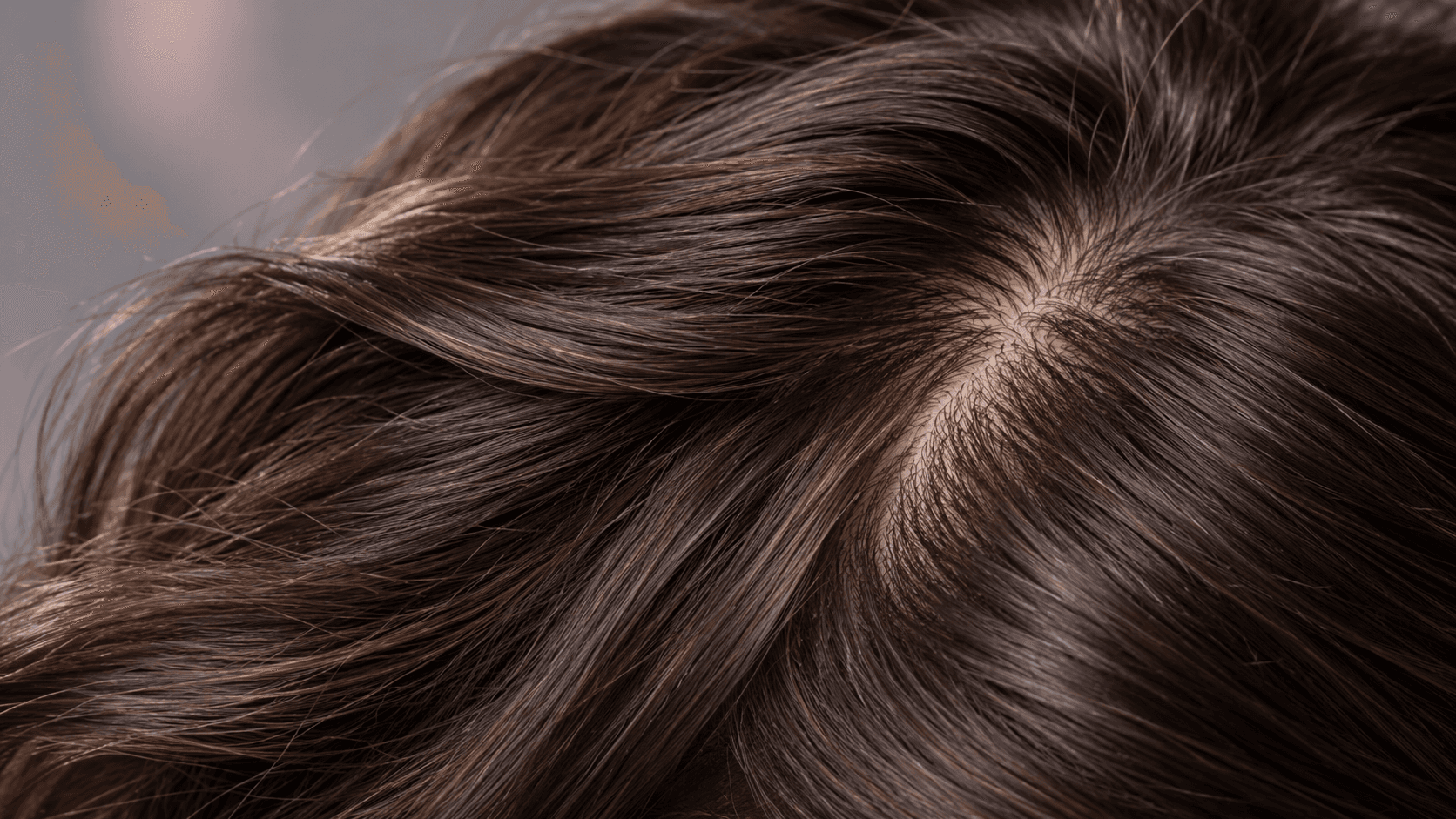
Hair in your brush, lengths that never seem to grow, hair that feels less dense: these observations often raise the same questions. Answering them means telling the natural renewal of hair apart from what happens to the fibre day to day. Understanding that difference helps you choose care with more realistic expectations.
The three main stages of the hair cycle
Each follicle follows its own rhythm. At any given moment, the same head of hair holds strands that are growing, in transition and at rest. There is no single phase to tailor all your care to.1
The anagen phase: the hair grows
The anagen phase is the period of active growth. It lasts several years, with significant individual variations. Hair grows by roughly one centimetre a month, so gaining length takes time.1
The catagen phase: a short transition
Hair production stops and the follicle changes. This stage, which usually lasts a few weeks, prepares the move to rest.1
The telogen phase: rest before renewal
The hair stops growing but stays in place for a while. After a few months, it falls out as a new hair takes over. The release of the hair is also described as a separate stage, called exogen.2
Does losing hair always mean there is a problem?
Losing around 50 to 100 hairs a day is usually considered normal. This figure is only a guide: on its own, it is not enough to make a diagnosis.3
Heavier shedding can appear several months after childbirth, a high fever, surgery or significant stress. This delay explains why the link with the triggering event is not always obvious. In some cases it is telogen effluvium, often temporary, whose course depends in particular on the cause.2
A gradual loss of density also deserves particular attention. Persistent or worrying hair loss warrants a visit to a dermatologist to identify its cause.3
Shedding and breakage: two different things
Shedding is when the hair comes away at the follicle. Breakage concerns the fibre: the hair snaps along its length. The two can occur together and give a similar impression of lost volume.
This distinction changes the aim of your care. Preserving weakened lengths is not the same question as finding the cause of hair loss. A mask can make your lengths feel better without being an answer to a hair renewal problem.
A routine that preserves your lengths
Care habits mainly aim to limit damage and harsh handling:4
- Use a gentle shampoo and a conditioner to make detangling easier.
- Brush or comb without pulling on knots.
- Use heated tools less often and dry your hair on a low heat setting.
- Avoid hairstyles that put repeated tension on the roots.
- Have your hair assessed before a chemical service when the fibre is weakened.
Diet matters too. Insufficient protein or certain nutrients can contribute to hair loss. Supplements should not become a reflex, however: their value depends on identified needs, and some excesses can be harmful.4
The role of advice at the salon
An appointment is a chance to talk about your habits, your length goals and your colour history. These conversations help choose a service and a routine suited to the condition of your hair.
When the question is about unusual hair loss, a medical examination can go further. Beauty advice and a dermatological assessment therefore offer complementary answers.
Sources
-
Adèle Berroche, "Pourquoi tu dois connaître le cycle de vie du cheveu", Thomas Tuccinardi. The article that inspired this topic, accessed 19 October 2026. ↩ ↩2 ↩3
-
DermNet, "Telogen effluvium". Information on hair renewal and telogen effluvium. ↩ ↩2
-
American Academy of Dermatology, "Do you have hair loss or hair shedding?". ↩ ↩2
-
American Academy of Dermatology, "Hair loss: Tips for managing". ↩ ↩2